Quantity source
- In-house line
- The line supervisor's stage entries can provide the basis.
- Subcontract workshop
- Dispatch lists can link to acceptance counts on return.
Development on request
Textile & Garment ManufacturingFollow an order's size assortment through production and see what returns from each subcontracted batch. Together, we will scope the textile production software we will build around your cutting-room bundles, production-line records and dispatch preparations.
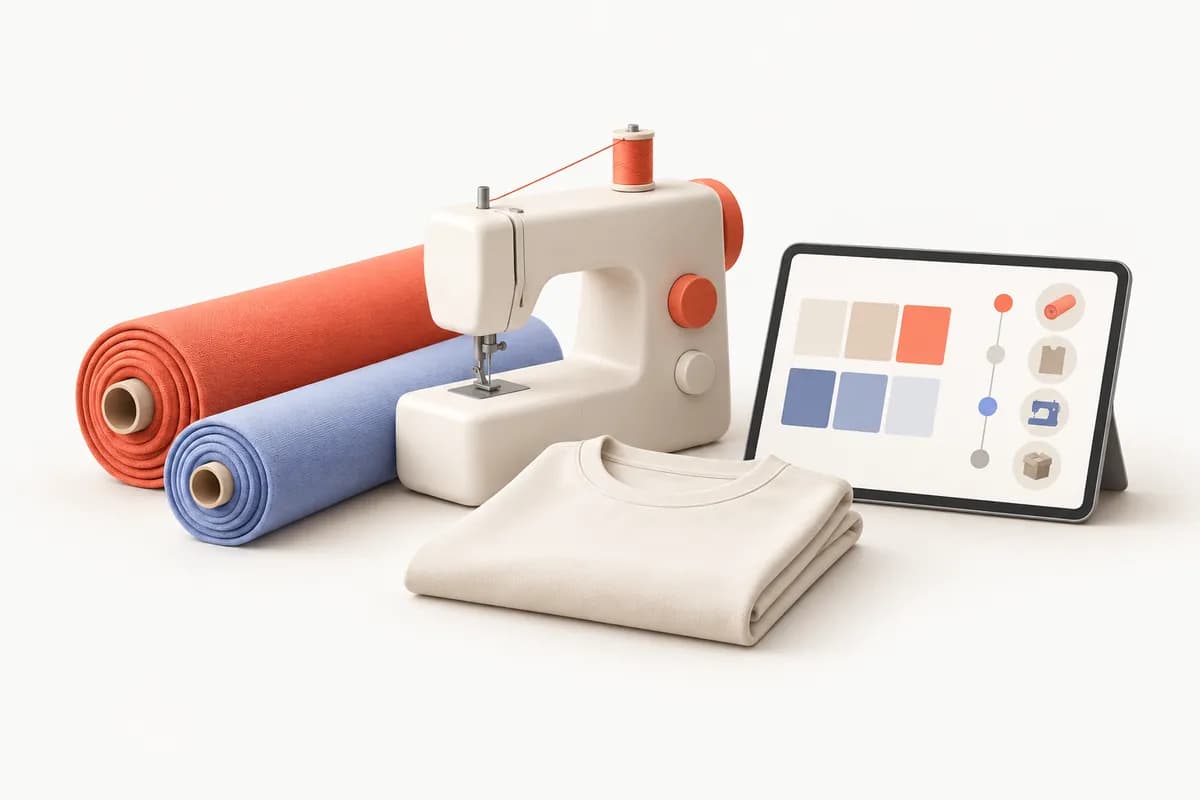
Preparing a shipment requires the right size mix as well as the right total quantity. When cut bundles go to different lines and workshops, an order total can look correct while one size in a particular colour is missing. Separate cutting lists and packing counts mean asking each stage again to trace the gap. We will plan a structure that carries style, colour and size into production-stage records. Once you decide where entries will be made, management summaries can reflect the dates and sources of those records.
We will work through a sample order from fabric preparation to packing. With cutting-room and line supervisors, we will decide which records are shared across colours of the same style and which movements stay separate. The sequence below can be adapted to the actual stage names on your production lines.
The style's colour and size mix can link to the order. The initial scope can consider fabric rolls, metres and planned consumption against the same job.
Define how cut quantities move into sewing, pressing and quality control. Choose short phone entries or end-of-day batch recording around the responsible person's working environment.
Quantities classified by quality can link to the packing list. Comparing each carton's colour and size mix with the order can form a dispatch preparation check.
Let us first choose the records needed for daily decisions. Detailed labelling and simple stage counts involve different data-entry workloads. Together, we will decide which bundles need individual identifiers and which materials only need order-level totals. The scope will then rest on information your workshop can realistically record.
Recording responsibilities change when you split production between your own lines and subcontractors. Your line can record stage counts directly; an outside workshop may rely on dispatch and receipt documents. If you use both routes, let us choose who verifies each movement. Keeping the workshop's reported quantity separate from your acceptance count can be considered in the project.
| Identify recording points on your lines and in subcontract workshops | In-house line | Subcontract workshop |
|---|---|---|
| Quantity source | The line supervisor's stage entries can provide the basis. | Dispatch lists can link to acceptance counts on return. |
| Quality classification | Defects can be recorded against the stage where they are found. | Defective and missing items in returned batches can be marked separately. |
| Cost relationship | Material consumption can be compared with stage quantities. | Subcontract charges can be considered alongside sent and accepted quantities. |
Let us separate the fields teams need to enter accurate quantities. A line supervisor recording a stage count does not need permission to change commercial order information. The software we will build can include identifying who made an entry and retaining reasons for quantity corrections.
Cutting-room and line teams can have entry rights for their own stages. Quality control can have separate permission to edit defect reasons and classify seconds.
If subcontractors need access, the scope can limit them to their own work. Management access to cost and dispatch summaries will be considered separately from outside workshop permissions.
For operator and contact details, we will consider KVKK, Turkey's personal data protection law, retention and export needs. Your business is the data controller; unnecessary personnel fields will be excluded from the initial list.
Keep return discrepancies visible so dispatch decisions rest on a reliable count. A subcontractor may report a total while your acceptance check identifies seconds or a missing size. We will treat dispatched batches, returned quantities and quantities suitable for shipment separately. Linked rework movements can prevent a returned piece being counted again as new production. We can also define who makes decisions that affect subcontract charges.
Let us start with more than a customer list. Open-order assortments, available fabric and batches already at subcontractors need a common starting point. Using sample tables without personal data, we will examine the consistency of style codes and size names.
Prepare mappings for different spellings of a style, colour codes and size order. Keep source fields separate so rolls and metres are not substituted for each other during transfer.
Compare cut quantities, work awaiting each stage and subcontracted quantities for a selected order. Trial transfers and your acceptance checks can be included in development.
For labels, examine technical access to printers and scanners. If accounting access is possible, plan field mappings and error handling; otherwise, file transfer can be selected to suit your needs.
Before discussing production scope, consider which jobs each data entry should connect. Our service and project pages help you discuss how different teams might use the same record. We will consider these examples alongside your own assortment and subcontracting rules.
Prepare an order assortment, cut-bundle list and subcontract return note for discovery. Remove personal and commercially sensitive fields. We will use the example to discuss how you currently find a missing size and who decides what happens next.
The proposal will be based on size-mix fields, subcontractor reports and record links for reworked pieces. Subscription use and support scope will be discussed in writing alongside responsibilities for later production changes.
We do not sell an off-the-shelf package: we design the software around your workflow, build the first version in short steps and keep running it after launch.
We listen to how your business works, your team and the tools you use today.
Modules, priorities and price are set out in a written quote.
We show working versions at short intervals and move on with your feedback.
We move your existing records across and help your team get started.
We run the software on a subscription and keep it up to date and secure.
Yes. We design stage entries so that they can be made from a tablet or phone. Barcode scanners or handheld terminals can be connected as part of the scope if you want them; in small workshops, a batch entry at the end of the day is also an option.
This can be part of the scope. Pieces going out and coming back, the difference between them and the subcontract fee are recorded separately. You decide whether a subcontractor gets limited access to see their own work.
Not on its own. Waste depends on marker planning, fabric quality and cutting-room practice. The software measures waste and shows in which style and at which stage it occurs, so that improvement decisions can rest on those records.
Exporting orders, shipments and stock movements to your accounting software can be scoped, and e-Dispatch Note and e-Invoice flows can also be connected. We discuss which package you use during discovery and tell you before development whether a direct connection or a file transfer is possible.
Printing barcode labels for cut bundles and cartons can be part of the scope. Which printers and scanners to use is decided in the discovery meeting, based on the equipment you already have.
Carton lists and packing lists broken down by colour and size can be prepared from production records. Customs declarations and letter of credit documents are outside the scope of this software; if you need an export document flow, it is scoped separately.
The software we will build can include rework movements that retain the link to the original batch. Preventing quantities returned from sewing from counting as new cutting will be defined alongside your acceptance and quality classifications.
Rolls, metres and garment quantities can be separate fields. During discovery, we will decide which records compare planned consumption for a style with actual consumption entries; measurements and quantities depend on your team.
After a discovery meeting we prepare a written quote covering the scope, the modules and the setup work. The software is provided on a monthly or annual subscription.
In our standard model the software is provided on a subscription and the source code is not transferred. If you need a different model, it is agreed in a separate written contract.
We build and operate the software. The business using it is responsible for how it is used, the data entered and the content published; the details are set out in the service agreement.
Print Shop & Commercial Printing
Software we build on request for printers and print shops: quotes, job cards, press and finishing stages, paper consumption, waste and the real cost of every job.
ViewCatering and Central Kitchens
We build software around your kitchen that follows the flow from site headcounts to production orders, and from recipes to allergen and temperature records.
ViewConstruction & Contracting
Software we build on request for contractors: subcontracts, site measurement with photos, interim valuations, deductions and guarantee letters, all kept in one record.
ViewShare your cutting and subcontract documents so we can choose the initial scope to develop for your workshop.