FEZA innovation – Home
Back to Services

Web Solutions

Modern websites, high-performance web applications and scalable e-commerce platforms.

Web software scope: separate visiting from getting work done

Focus your investment on the work that matters. For a consultancy, a company website helps visitors read about services and request a meeting; for a salon employee, a web application completes appointments and records payments. We start a web solutions discussion with this distinction. Together, we identify who will use the site, what information they need and which task they must complete, bringing pages, screens and data into one scope.

Visitor task

  • Visitors
  • Reading services and contacting you

Team task

  • Staff and managers
  • Records, appointments and payments

Business need: Make the scope comparable across your team

Presentation and operational deliverables

If sales needs product presentations while operations needs customer records, we discuss separate deliverables rather than one vague requirement. Company websites, bespoke web applications and e-commerce each have different content owners, user roles, connections and acceptance examples.

Current site and task example

Bring your current site, a record list and a task you want to complete to the first conversation: these show where a solution could help in daily work.

Company web design: help visitors find the information they need

Give people looking for your service enough information to decide. Company web design brings service pages, company information, project examples and contact routes together. For a business serving several sectors, finding a relevant section is more useful than a generic introduction. We plan page order, headings and contact prompts around visitors' questions, and agree who will prepare each text and image when defining the scope.

Content owner

Tell us who will prepare the service copy and project images.

Publishing frequency

Discuss how often you add services and how content is approved.

Publication and translation management

Content approval
When you add a service, we discuss who approves the text, which image to use and how to handle old links. An administration screen or headless CMS can be scoped around those responsibilities.
Translation owner
Occasional text changes and regular publishing create different content management needs. If you need multilingual pages, the language list, translation responsibilities and contact journey in each language are separate deliverables.

Bespoke web applications: let teams work with the same record

Follow daily work alongside its record. A bespoke web application does more than display information: one user starts a task, another checks it, and the record moves to a new state. An employee booking an appointment and a manager reviewing payment records use the same client information for different purposes. We derive screens from these roles, agreeing which fields are visible, who can change them and what activity history is needed.

A cancelled booking, a client record with missing details or an incorrectly entered payment are natural parts of application scope. Including these alongside the normal flow clarifies the behaviour your team expects. For SaaS and portals, we also discuss the company or account boundaries within which users work.

Next.js, React, Node.js and TypeScript are on our technology list; selection depends on interface, data and connection needs. Start by describing the task you want to finish.

  1. 01

    Roles: identify screens

    Explain separately the jobs of users who create records and those who check them.

  2. 02

    Exceptions: prepare an acceptance example

    Describe the result you expect after an incorrect entry or cancellation.

E-commerce software: define the order journey from the start

Think through sales from product information to delivery tracking. In a B2B or B2C discussion, catalogue, product options, customer accounts, basket and order management are separate topics. A supplier selling to businesses may need quotations or account-based ordering; direct consumer sales may focus on finding a product and completing an order. Discovery defines the steps, connections and team responsibilities you need.

If stock comes from another system, we discuss its update source; payment connections depend on provider conditions, and delivery tracking requires agreed data fields. Explain returns, cancellations and missing product information through examples too.

Product photographs, descriptions and sales copy are planned alongside your publishing responsibilities. Reviewing order states and the team acting at each state in writing, alongside the screen list, makes management needs visible.
Order states

Describe your team's sequence from basket to delivery.

Stock and payment source

Share your existing stock, payment and delivery systems.

A web application example: from appointment to payment

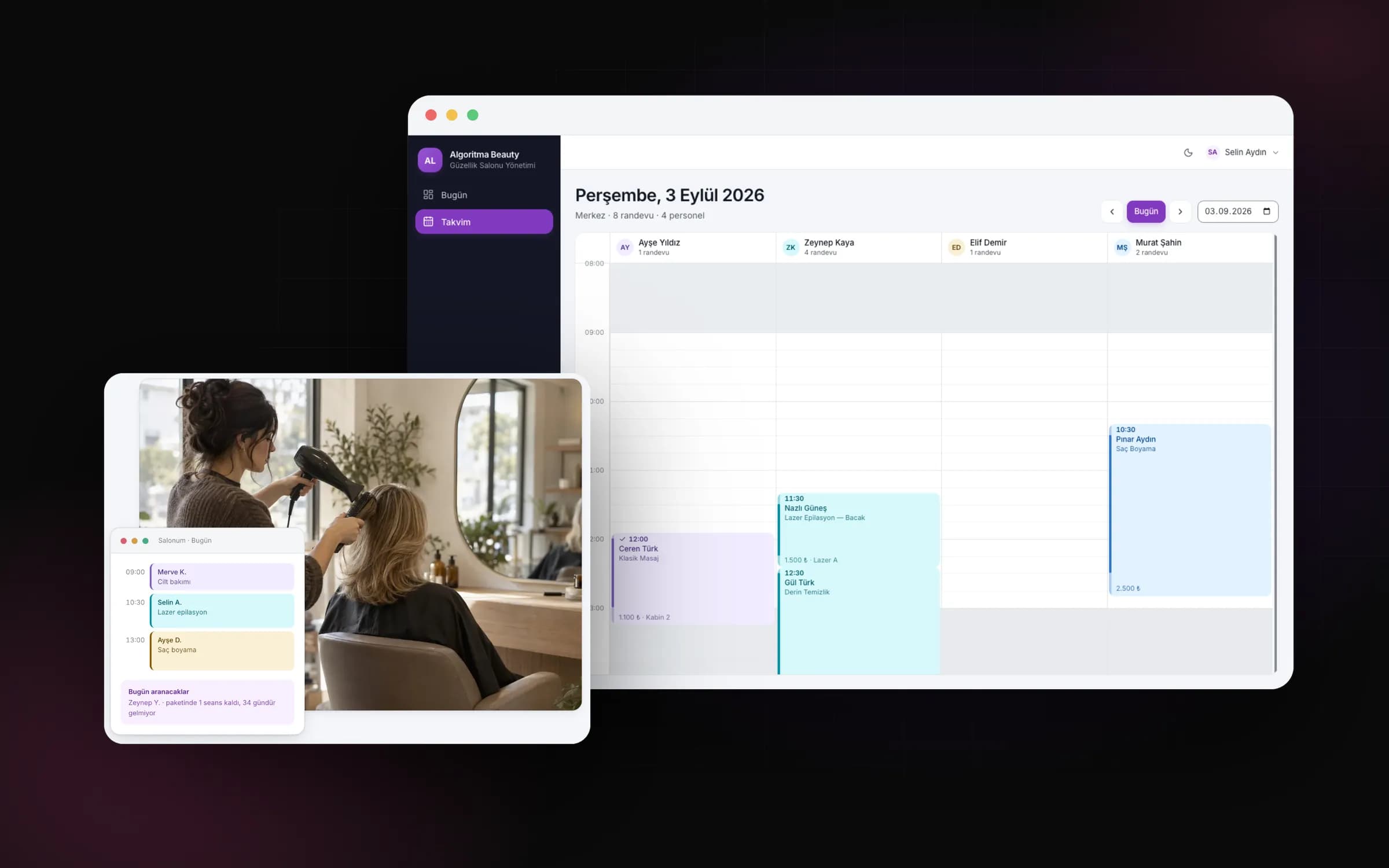
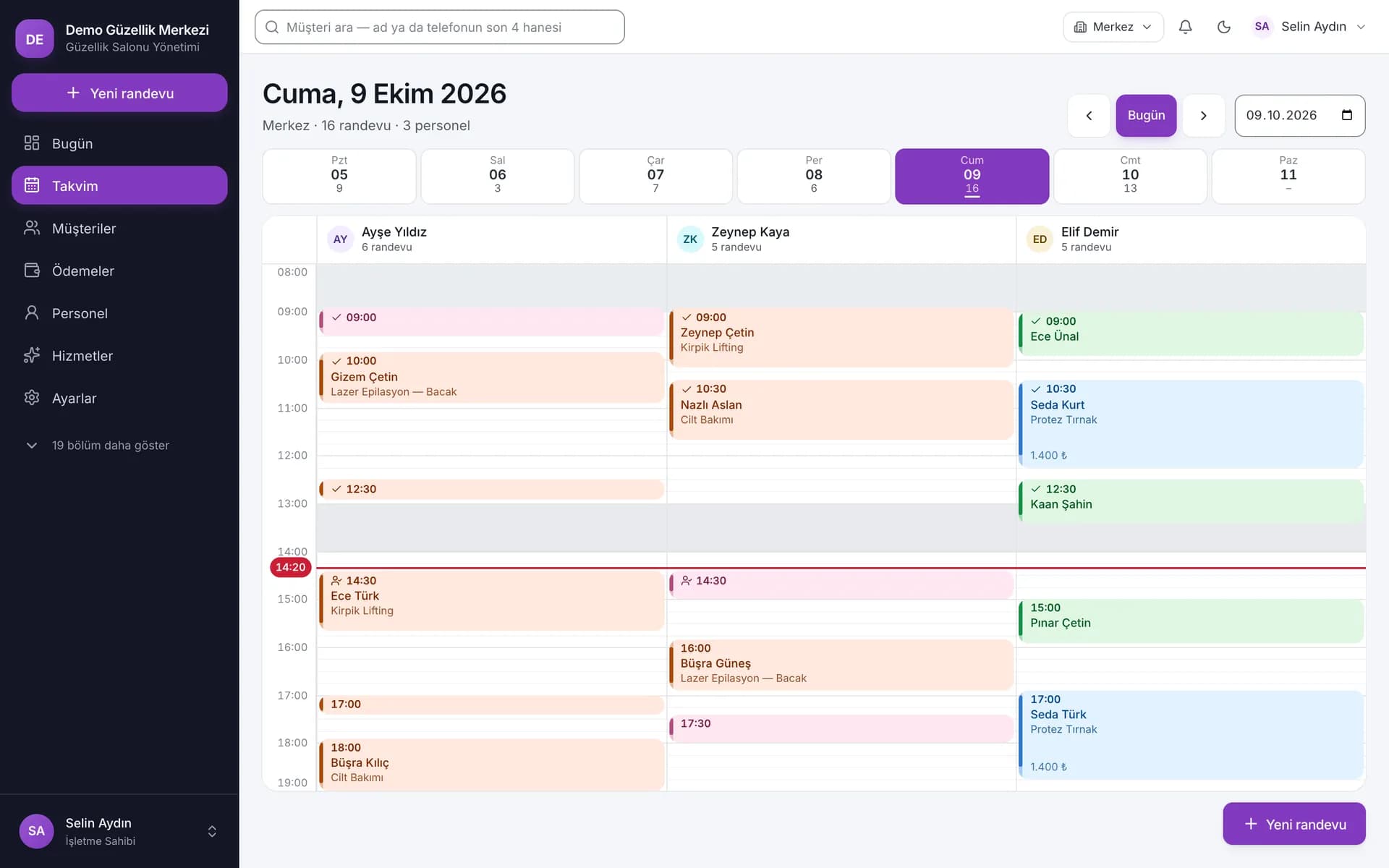
Explore daily work through an existing product. Beauty Salon Software displays staff columns in its calendar; the appointment engine considers staff, room and equipment availability together. Service duration, preparation time, working hours and breaks also affect available slots. A receptionist arranging a skincare appointment illustrates the business rules behind the interface. The screens below use sample data; the product interface is in Turkish.

Completing an appointment records package usage; reversing completion restores the entitlement through a reversing entry. Payments can track part payments and outstanding balances, including a previously recorded deposit. At cash close, the counted amount is entered before the expected amount and difference appear.

Use this sequence to explain who handles each step in your business. Review existing features on the detailed product page, then discuss the modules you need in a demo.

  • Appointment availability considers staff and resources together.
  • Package usage is recorded when the appointment is completed.
  • Part payments and outstanding balances can be followed in the same client journey.
Daily calendar with staff columns and coloured appointments; Turkish interface
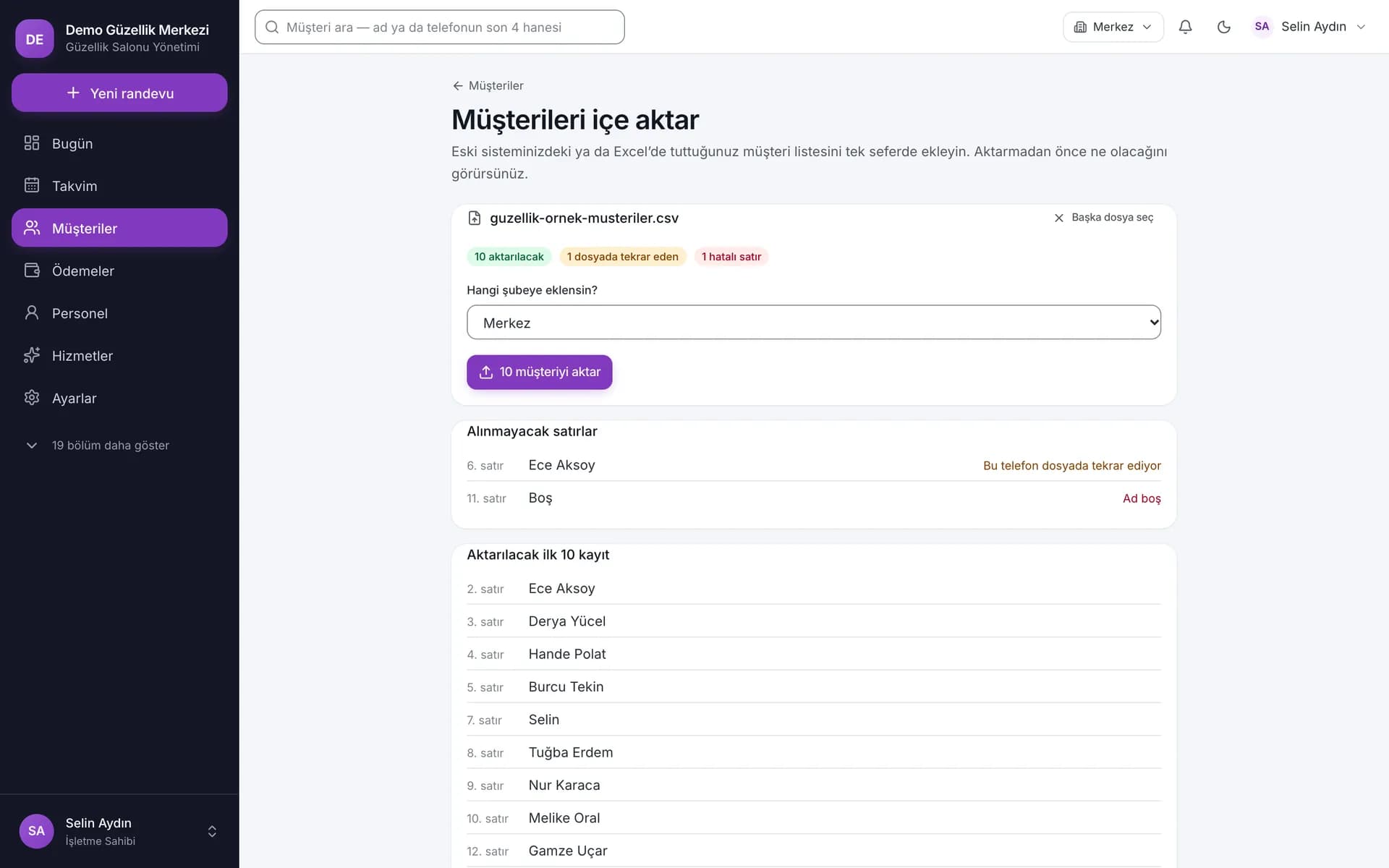
CSV preview showing customer rows to import, duplicates and errors; Turkish interface

Web software examples: compare roles and tracking needs

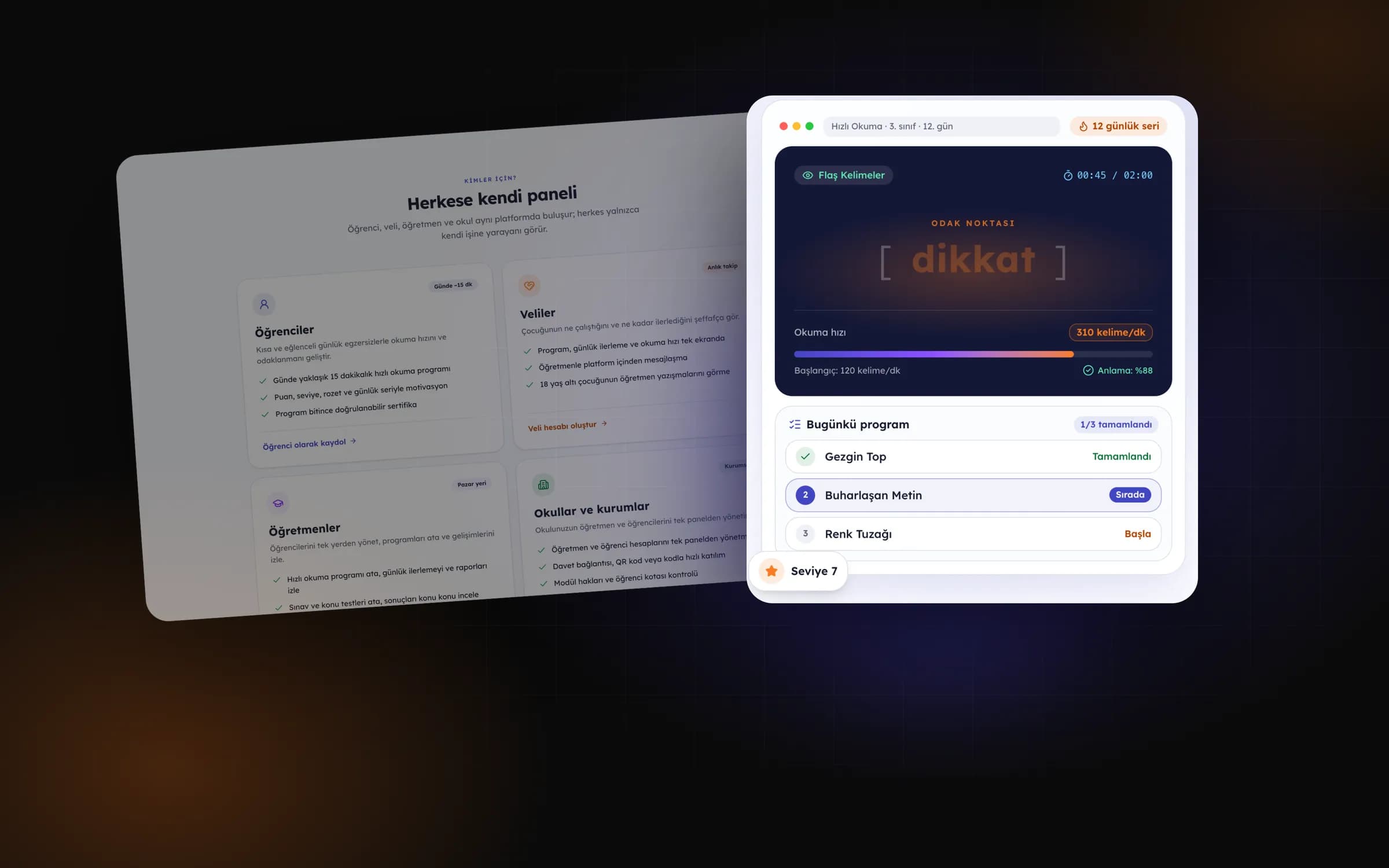
Consider your user roles through existing projects. Algoritma Akademi brings student, parent, teacher and institution panels into one learning platform. Students view their daily programme, parents follow progress, teachers assign programmes and tests, and institutions manage their own teachers and students. This shows how the same data becomes different screens for different users. Identify which role needs which information in your education business. The product interfaces shown are in Turkish.

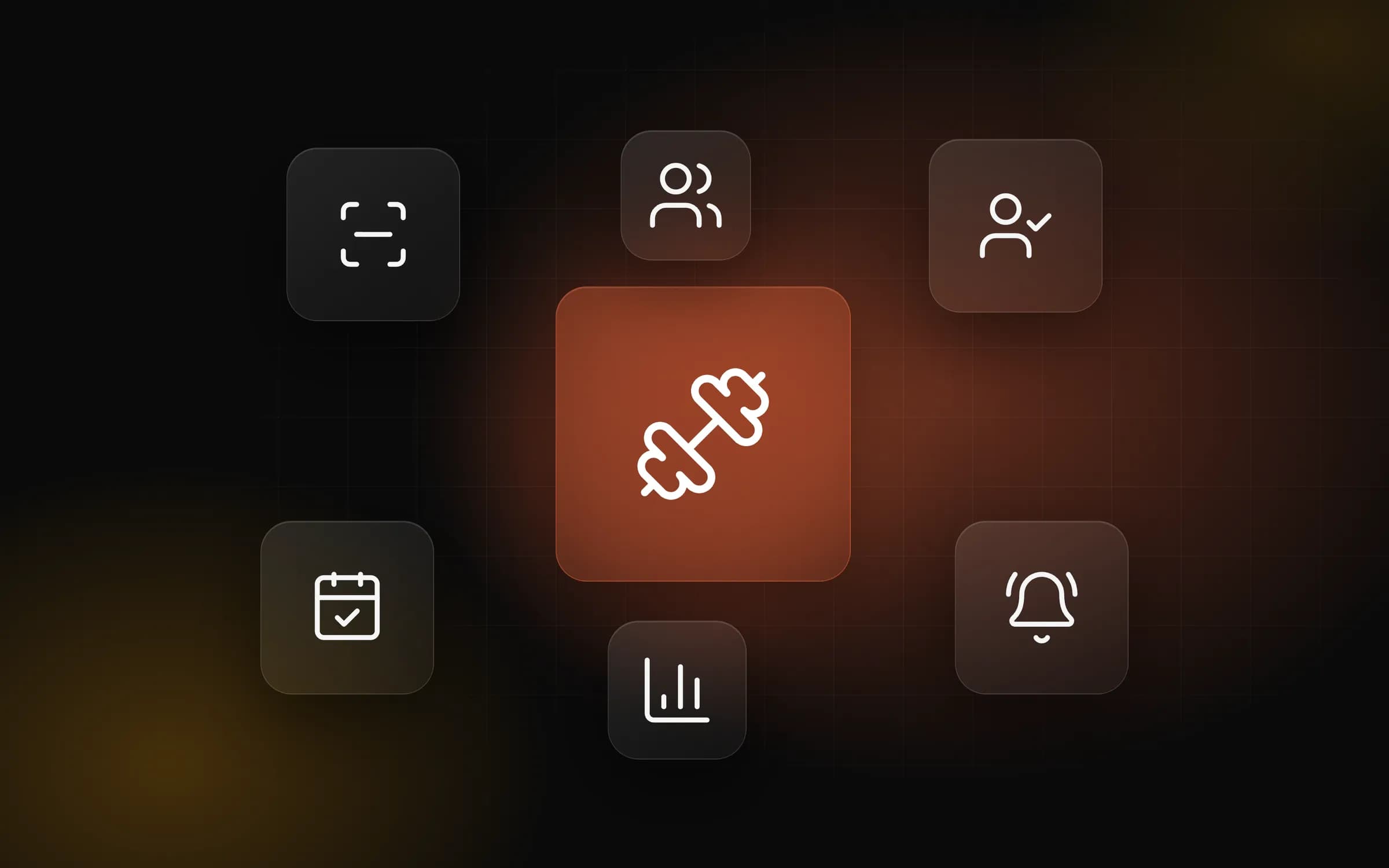
Gym software cover with membership, entry, renewal and reporting icons

Membership tracking: Relate tracking needs to the rhythm of daily work

The Gym Management System combines membership, visits, renewals and payments; members attending less often and approaching renewals stand out in the team list. Its cover illustrates membership and tracking with icons. The academy images show daily programmes and panels. Use these examples to choose your first screen, daily checklist and management information. Each project's case study explains its context.

Web design delivery: prepare content and interface together

Base design decisions on the information you will publish. Page structure, heading order, copy, images and contact steps are considered together. A service page requiring a longer scope explanation needs a design that breaks it into readable sections. Agreeing where content comes from, which project images may be used and who approves the copy makes the design conversation concrete.

Service copy and images

Discuss page structure with a service text and images you can use.

Example task on each device

Prepare tasks for visitors on phones and staff on desktops.

Accessibility and search information

Form accessibility
We consider responsive interfaces and accessibility alongside screen size; form labels, keyboard access, readable text and error messages can become acceptance examples. A customer completing a contact form on a phone and an employee checking records on a desktop have different working conditions.
Search titles
Written scope defines the pages and states to deliver. Page titles, descriptions and content hierarchy for search engines are also discussed as part of website delivery.

Web software integration: plan record migration with checks

Understand the information to migrate before moving it. We review existing file fields, duplicate records, missing values and their equivalents in the new system. A list with customer names and phone numbers in separate columns may be a different migration scope from appointment and payment history. Beauty Salon Software has a CSV preview for basic client details; your project's migration fields and checks are scoped separately.

For API integration, we discuss which system supplies each field, access permissions and error states. An order with different states in two systems or an interrupted connection is more informative than describing successful transfers alone.

Data cleaning, trial migration, checks and approval responsibilities can be written into the delivery scope. The service agreement explains your responsibilities for personal data use and published content; access needs are designed around user roles.

Data: review a sample list

Let us review fields to migrate, duplicates and missing information together.

Transfer approval: name the approver

Tell us who will review and validate the trial migration.

Website launch: plan acceptance, publishing and maintenance separately

Assess delivery through completed tasks. Acceptance scenarios may include visitors finding a page, completing a form or staff finishing a sample record. Incorrect input, empty results and unauthorised actions belong in that review too. An appointment clash in the salon application is checked through whether the record is accepted, alongside its screen colours. After discovery, we discuss which browsers, screen sizes and roles the scope will cover.

Launch preparation, access details, existing URL migration and content checks may form part of the delivery plan. Maintenance distinguishes fault reports, change requests and new features, with written responsibilities. Adding service copy and requesting a new payment workflow are different tasks.

Review support and operation in the written proposal. Our standard software model is subscription use; source code or a different arrangement requires a separate written agreement.

  1. 01

    Acceptance: check the outcome

    Choose examples showing that a form or record task finishes correctly.

  2. 02

    Maintenance: separate the work

    Discuss fault reports, copy changes and new features separately.

Web solutions guide: assess existing products and bespoke scope

Compare your decision with the daily workflows of existing products. If you run a salon, gym or education business, review the available product scope and ask about the modules you need during a demo. Explore Beauty Salon Software for appointments and packages, or Gym Software for membership renewals.

Our website versus web application guide explains where presentation and operational work differ. List visitors' tasks and your team's tasks separately as you read. Then share your data, content owner, user roles and external connection requests through the contact form.

We discuss scope and a proposal using this information; demos and subscription terms for existing products are clarified in the product conversation. This keeps page design and maintenance responsibilities connected to the same business goal.

If your process differs, explaining those differences helps us discover your bespoke web application needs. The existing product interfaces are in Turkish.

Frequently asked questions

Do I need a company website or a web application?

Choose by the task to be done. We discuss company websites for visitors reading services and contacting you, and web applications for staff creating records, approving tasks or tracking payments. Share an example from your daily work.

How is e-commerce scope defined?

Describe your order flow through catalogue, customer account, payment, delivery and management steps. B2B or B2C needs and external connections are assessed separately; the written proposal defines screens and business responsibilities.

Who prepares the content and images?

Plan publishing with the people responsible. We agree which texts and images you supply, the scope of content work and who gives final approval. A service page can serve as a sample delivery checklist.

Can existing records be migrated?

Assess migration through fields and a sample file. Basic client lists, appointment history and financial history may be separate scopes. We discuss data format, cleaning, trial migration and checking responsibilities before the proposal.

Are mobile layout and accessibility considered?

Define the scope around users' devices. Responsive interfaces, readable content, form labels and keyboard use can be included in acceptance scenarios. Supported screen and browser conditions are agreed for the project.

What does maintenance after launch cover?

Discuss faults, content changes and new features separately. The written scope defines support channels, maintenance responsibilities and change assessment, including areas managed by your own team.

How is web software pricing determined?

Get a proposal based on a concrete scope. Pages, roles, modules, migration and connections are discussed during discovery, followed by a written proposal. The standard software model is a monthly or annual subscription.

Is source code handed over?

Clarify the usage model in the agreement. Under the standard subscription model, source code is not transferred. Discuss a different requirement with us; its terms are considered in a separate written agreement.

How can I purchase existing products?

Request a demo from the product page and discuss the appropriate scope. Online sales are planned; currently, a suitable package and price are provided in writing. Compare your daily work with the screens to inform your choice.

Who is responsible for data and published content?

Agree responsibilities in the service contract. We develop and operate the software; the business using it is responsible for use, entered data and published content. For example, client migration accuracy checks are planned alongside team responsibilities.

02 // Technology Stack

Next.js
React
Node.js
TypeScript

Projects Built With This Service

Let us define your web solutions scope together

Share a daily task, your team's roles and your current tools. Together, we can define the right scope in a discovery conversation.

Start the Project