Entry information
- Timed parking
- Registration, arrival time and applicable tariff are defined.
- Permit vehicle
- Registered vehicle, permit period and validity are checked.
Developed on request
Car Park & Valet OperationsTrack entry, permit status and exit payment within the same parking visit. We will define tariffs, valet handovers and shift changes for the software we will build using your operating documents. Capacity decisions and permit validity will be scoped separately.
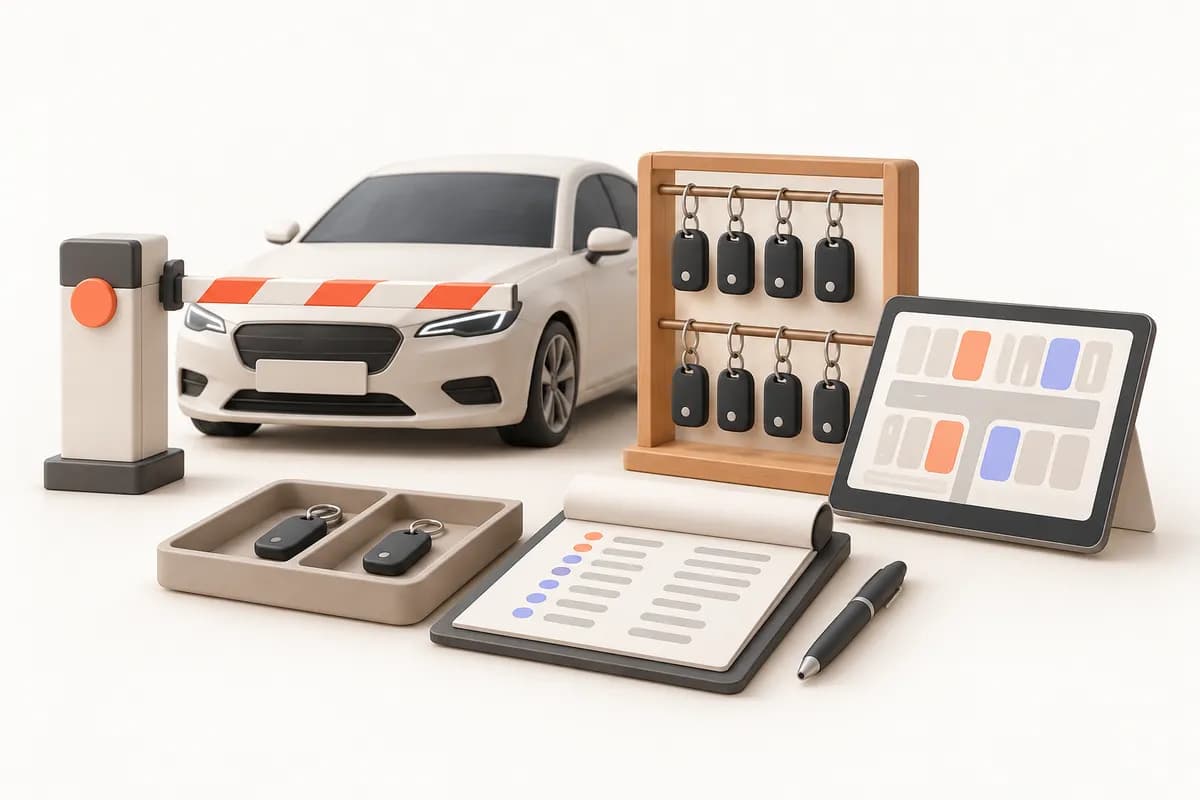
Keep records from entry to exit so shift-end differences can be traced. Lost tickets, verbal discounts and missing exit times can obscure the day’s accounts. Valet services add questions about key custody and vehicle location. Checking the permit book is another task during busy arrivals.
The software we will build will link visits to registration numbers, times and attendants. Payments, cancellations and manual adjustments could be scoped as separate movements within the visit. You will define the cash and card records used at shift handover. With multiple car parks, the design can identify which location each capacity and cash summary belongs to.
We will build the sample day around a paid visit and a permit holder’s arrival. Share your entry fields and exit tariffs. If you offer valet parking, explain when key labels and parking locations change. In the project we will build, an ongoing visit, fee calculation and payment will be defined as separate states.
Entered registrations, arrival times and permit matches could be included. Validity and available spaces will be separate checks at entry.
Key number, parking location and receiving attendant could be linked. Vehicle requests could include queue order and the attendant retrieving the car.
Calculated fees, payment methods and discount reasons could be retained. Handover comparisons with cash and card totals will be planned.
Camera connections can be considered separately from daily records. The first release could use attendant-entered registrations for arrivals and departures. Hourly, daily and overnight tariff periods will follow your rules. Permit renewals, contracted vehicles and free periods can be designed separately from tariffs. For multiple gates or sites, we will discuss central management and each shift’s own cash records.
A valid permit and an available space are separate matters. Timed parking focuses on the entry-to-exit tariff; permit holders require checks of registered vehicles and contract periods. If you accept corporate vehicles, define their permit groups. The software we will build will handle timed visits, permit checks and capacity assessments separately. Scope can then associate each applied rule with the relevant arrival.
| Different checkpoints for timed parking and permit holders | Timed parking | Permit vehicle |
|---|---|---|
| Entry information | Registration, arrival time and applicable tariff are defined. | Registered vehicle, permit period and validity are checked. |
| Exit calculation | Parking duration and discount decisions could link to payment. | Covered use and additional-fee rules will be discussed. |
| Full-site decision | Acceptance or waiting could be selected for a new visit. | Capacity decisions will be scoped independently of valid permits. |
The information an entry attendant needs to check a permit differs from management’s payment reports. Gate, valet and cash responsibilities will be selected in the project. Correcting an exit time, applying a discount or reopening a closed shift could require separate permissions. You can specify when explanations are required and which records should be reviewed at handover.
Registration, parking locations and key handovers could follow task scopes. Access to permit holders’ contact details will be assessed separately.
Discounts, cancellations, payment-method changes and explanations of shift differences could be linked to authorised people.
KVKK, Turkey's personal data protection law, image retention and access records are considered in scope. Turkish fiscal-device, payment-terminal and document requirements will also be discussed.
A permit can still be valid when no spaces remain. A positive validity check should not itself decide admission. The project we will build could keep permit matches and capacity results separate. You will define when to wait, notify a supervisor or use another direction established by your business.
The attendant’s decision and reason could be linked to the attempted entry. We will discuss recording the actual entry time if the vehicle later enters. Valet key acceptance will also be treated separately from capacity decisions. If permits include reserved-space conditions, their fields will be scoped around your contracts.
We will review registration formats and permit start and end dates together. You can define how several vehicles relate to one permit holder. Vehicles inside at migration time will not be treated like old closed visits. The open shift’s cash and active tariff version will also be checked separately during migration preparation.
Duplicate registrations, missing periods and corporate arrangements will be reviewed in a sample. Anonymised records can guide matching fields.
Vehicles inside, entry times and valet keys could be compared in a trial transfer. Opening cash will be linked separately to its shift.
Camera or barrier access will be assessed if the provider offers it. Records during outages and later matching will be discussed separately.
Car park scope involves entry decisions, device data and shift closing alongside tariffs. Our automation service offers a starting point for these relationships. The article below explores websites and applications that manage daily records. Use these resources to consider which gate and cash actions need to share a workspace.
Share tariff periods, permit types and a blank closing form. For valet services, explain key labels and vehicle-request order. Camera, barrier and payment-device models can inform connection reviews. We will define the first entry and cash scope using these inputs, then discuss multiple sites and reports as separate quotation items.
Scope will distinguish manual registration entry from device connections. Subscription use and support terms will be considered in writing after discovery.
We do not sell an off-the-shelf package: we design the software around your workflow, build the first version in short steps and keep running it after launch.
We listen to how your business works, your team and the tools you use today.
Modules, priorities and price are set out in a written quote.
We show working versions at short intervals and move on with your feedback.
We move your existing records across and help your team get started.
We run the software on a subscription and keep it up to date and secure.
No. We design the software to work without cameras: the attendant types the plate, and tariffs and the cash-up work in the same way. If you want ANPR cameras, they can be connected as part of the project scope; which devices are suitable is clarified in the discovery meeting.
That depends on the connection method the equipment offers. We review your barrier and turnstile models during discovery and tell you clearly, before development starts, whether a connection is possible.
We address outages in the scope from the start. The software can be designed to keep recording entries and exits locally and to sync them when the connection returns; an accurate shift cash-up depends on that.
Only the people you authorise. We set discount and void rights by role; every action is recorded with the name of whoever made it and appears as its own line at shift handover.
Payments are recorded in the software. Connections to cash registers (ÖKC) and card terminals are scoped per project and made only with devices that meet the regulations; e-Archive invoice flows can also be connected if needed. Your accountant advises on which document must be issued.
Waiting and actual admission could be scoped as separate fields. We will determine which time governs charges and permit assessment around your operating rules.
Key handovers could link previous and new custodians within the same visit. Location changes and ongoing vehicle requests can be defined independently of that handover.
After a discovery meeting we prepare a written quote covering the scope, the modules and the setup work. The software is provided on a monthly or annual subscription.
In our standard model the software is provided on a subscription and the source code is not transferred. If you need a different model, it is agreed in a separate written contract.
We build and operate the software. The business using it is responsible for how it is used, the data entered and the content published; the details are set out in the service agreement.
Vehicle Servicing & Pre-Purchase Inspection
We build software that links every check-in, inspection report and job card to the vehicle's registration, shaped around the way your garage works.
ViewCar Rental & Fleet
We build software that tracks availability, agreements, handovers and maintenance for every vehicle in your fleet, shaped around the way your branches work.
ViewGrocery & Corner Shop
Software we build on request for grocers and corner shops: barcode sales, stock, a digital credit book and what you owe your wholesalers, all kept in one place.
ViewUse your tariff, permit and valet examples to select the development scope for your car park.