Starting information
- Date-based tracking
- The latest replacement date and selected interval are assessed.
- Litre-based tracking
- Meter readings and the filter's defined method are considered together.
Device and maintenance scope for your water treatment business
Water Purifiers & Scheduled ServicingReview installation, filter history and approaching service needs together. We will scope the water treatment service software we will build around your maintenance methods, technician visits and payment routine.
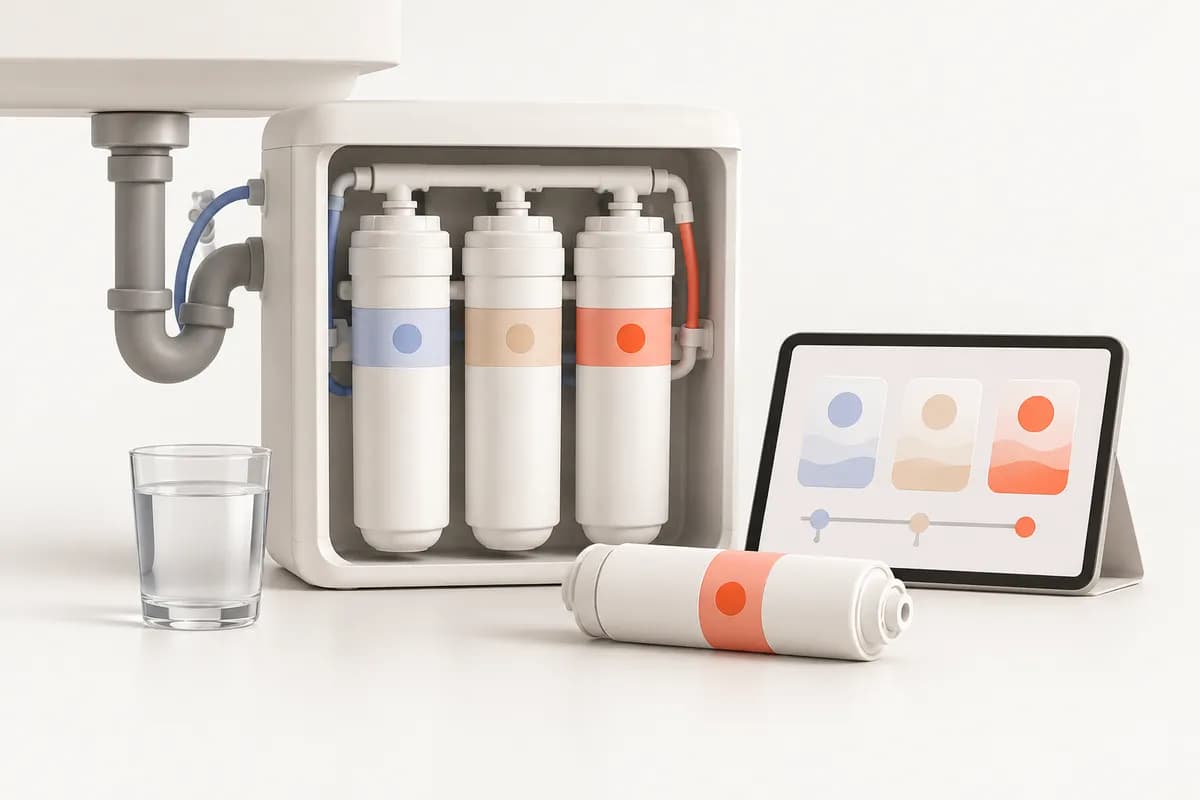
A customer's name may be in a notebook while the filter set replaced on the last visit is recorded elsewhere. A calendar based only on sale dates may fail to reflect later servicing. You need to assess replacement needs against the device's actual history. The software we will build will scope customers and devices as separate linked records. Serial numbers, installation dates, filters and measurements can belong to the device. Visit outcomes and new appointment needs can be planned within the same history.
Consider a device nearing your defined replacement interval. Office contact and technician maintenance are different actions. Explain how you record availability and filters used so we can distinguish appointments from outcomes. Date-based or litre-based methods can link to device types. Measurements, changed parts and payments will have separate fields. Your maintenance rules will determine which completed action starts the next follow-up period.
Approaching replacements can be listed using the device's filter method and latest action. Appointment status can be recorded separately after the office contacts the customer.
Assignments by neighbourhood and day availability will be scoped. Device history fields needed by technicians will be selected for their tasks.
Changed filters, parts used, measurements and customer signatures can link to visits. Effects on future schedules and payments will be defined separately.
Organising device identity and latest maintenance can establish the basis of the filter schedule. We will prioritise your most confusing records. Device sale instalments and service collections may belong to the same customer but remain different transactions. Your definitions will identify devices and visits covered by periodic maintenance agreements. For dealer networks, central views and regional access will be discussed separately. Map and messaging connections depend on provider technical access.
Not every device needs the same method. Date-based tracking uses the latest maintenance date and your interval; metered devices also require litre readings. Explain device and filter types so we can select methods for each record. Effects of technician-entered values and missing readings will be considered in scope. Measurements inform maintenance records; device condition assessments follow your service approach.
| Inputs for date-based and litre-based filter replacement tracking | Date-based tracking | Litre-based tracking |
|---|---|---|
| Starting information | The latest replacement date and selected interval are assessed. | Meter readings and the filter's defined method are considered together. |
| Visit inputs | Completed maintenance dates can inform the next follow-up. | Technician-entered litre readings can be method inputs. |
| Missing records | Unknown maintenance dates can be set aside for review. | Service checks for missing meter readings will be scoped separately. |
A dealer technician viewing daily visits need not access every region's customer list. The software we will build will plan access through tasks and regions. Central maintenance reviews and accounting corrections require different permissions. Addresses, telephone numbers, signatures and service histories will be assessed under KVKK, Turkey's personal data protection law. Customer consent and message purpose will be considered alongside relevant legislation. Field information will be selected separately from technicians' stated needs.
Device identity, necessary history and visit address visibility will be defined. Correction permissions will be discussed separately.
Regional customer and visit boundaries can be selected. Detail levels within central summaries will be separate scope.
Retention, access and deletion will be assessed in the project. Your business is the data controller; messaging consent records will also be discussed.
A filter replacement visit may reveal another part problem. This need not mean planned maintenance is complete, and may require another decision. Periodic work, fault notes and warranty assessment can have separate fields. Explain how you review warranty start dates and service terms. Customer approval, parts and payments for work classified outside warranty will be considered separately. If only some filters change, the need to avoid restarting the whole set's schedule can be assessed per filter.
Existing lists may show models without the latest replacement date. Rather than import them as confirmed maintenance dates, we will identify review needs. An anonymised file can map customers, devices and filters. Multiple devices for one customer require serial number and installation address checks. Open service jobs and collections, if included initially, will have acceptance criteria separate from maintenance history.
A customer's different devices will be matched in samples. Missing serial numbers and inconsistent model names will be reviewed before import.
Filters with and without replacement history can be separated. We will define which missing information an initial check visit should supply.
Map access enables route input assessment. Offline records, if needed, can be scoped separately for device storage and later synchronisation.
Periodic service needs device history alongside recurring appointments. Calendar relationships in our ready beauty salon product can inform discussion; your filters and serial numbers will be defined separately. Our web service helps explore office and technician tasks on the same record. Describe a device's last visit without personal details to choose history fields for the first release.
Start with a blank device record, filter types and maintenance intervals. Explain technician completion information and who makes warranty decisions. For the software we will build, we will identify device and periodic tracking areas first, then dealer access and agreements. Routes, messages and financial documents will be discussed separately under provider conditions.
The proposal will follow selected methods and field requirements. Subscription, support and additional scope decisions will be discussed in written usage terms.
We do not sell an off-the-shelf package: we design the software around your workflow, build the first version in short steps and keep running it after launch.
We listen to how your business works, your team and the tools you use today.
Modules, priorities and price are set out in a written quote.
We show working versions at short intervals and move on with your feedback.
We move your existing records across and help your team get started.
We run the software on a subscription and keep it up to date and secure.
Two methods can be designed: by time, at intervals you set, or by litres used on metered units. You define which method applies to which device and can shorten the interval for conditions such as hard water. The reading a technician enters on site updates the schedule.
Yes. The most important field is the date of the last filter change, because the schedule cannot be built without it. Where that date is missing, the technician enters it at the first visit and tracking starts from there.
Yes, we design the permissions that way. Each dealer sees the customers, visits and stock in their own region, while head office sees the filter schedule and overdue services across all regions.
We can design the field screens so that records can be saved without a connection and synchronised once it returns. Whether this is needed depends on where your teams work and is settled during scoping.
Whether a message counts as commercial communication is a legal question, and we recommend clarifying it with your legal adviser. We design the software to record through which channel and when each customer gave consent, and to send no messages to customers who have not.
Recording completed replacements per filter and updating only the relevant tracking inputs can be scoped. We will define filters serviced together, date or litre methods and visit completion according to your rules.
Faults found during visits, additional part requests and customer approval can be considered separately from maintenance. Warranty records, decision permissions and payment relationships will be selected during scope discussions.
After a discovery meeting we prepare a written quote covering the scope, the modules and the setup work. The software is provided on a monthly or annual subscription.
In our standard model the software is provided on a subscription and the source code is not transferred. If you need a different model, it is agreed in a separate written contract.
We build and operate the software. The business using it is responsible for how it is used, the data entered and the content published; the details are set out in the service agreement.
Technical Service & Device Repair
We build software that follows every device from booking-in to collection, shaped around the way your workshop and field technicians actually work.
ViewCarpet Cleaning Plants
We build software that follows every carpet you collect from its label to its return, organised around the stages in your plant and the rounds your vans make.
ViewCourier & Parcel Operations
We build software that records every step of a parcel from intake to delivery, organised around your delivery zones and the way your couriers work.
ViewShare filter methods and technician records to identify priorities for your business.